The Four Winds
By Kristin Hannah
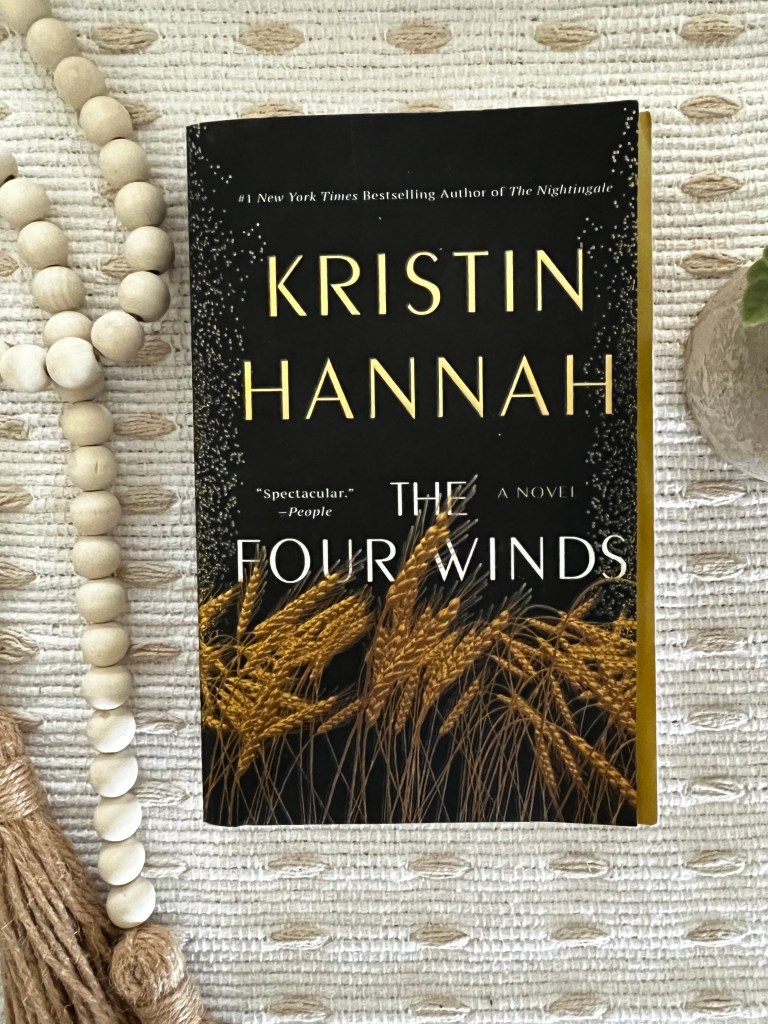
Author: Kristin Hannah
Genre: Historical Fiction
Published: 2021
Rating: ★★★★★
In my previous Kristin Hannah reviews, we traveled back to World War II and the Vietnam War. This time, we’re traveling to the Great Depression—and into a story that left me angry, heartbroken, and unexpectedly more grateful for my own life.
The Four Winds follows Elsa Martinelli, a wife and mother living on her husband’s family farm in Texas. Elsa’s life had already been difficult long before she became a Martinelli, and marriage certainly didn’t make everything easy. But she had her two children and, in her mother- and father-in-law, a family who helped her weather the hardships that came her way.
For years, the Martinelli farm provided them with a decent living. Then the drought came.
The crops failed. The dust storms followed. And eventually, Elsa was forced to leave the life she knew and take her children west to California in search of something better.
Instead, things got worse.
This was the part of the story that infuriated me.
Families who had already lost nearly everything arrived in California desperate for work—not handouts, just an opportunity to earn enough money to feed their children. Instead, they were treated as though their poverty made them less deserving of dignity. They were mocked for their clothing, their smell, and the conditions they had been forced to live in. Work was difficult to find, and when they did find it, their desperation was exploited through wages so low that even working could not guarantee enough food for their families.
Kristin Hannah does not make Elsa’s struggle comfortable to read. There is hunger. Filth. Sickness. Exhaustion. There are families living together in tents, struggling to find clean water and going without basic necessities that I rarely have to think twice about.
And through all of it, Elsa keeps going.
Not because she is fearless. Not because she possesses some endless reserve of strength. She keeps going because she is a mother, and two children are depending on her to find a way forward.
That part hit me differently now that I am a mother myself.
Elsa wants what so many parents want: for her children to be fed, safe, educated, and given the chance to have a better life than the one circumstances have handed them. Again and again, when it seems as though there is nothing left for her to give, she finds something, because she has to.
And somewhere along the way, Elsa’s story began changing the way I looked at my own life.
I have complained about my older, smaller home. After reading this book, I found myself thinking: I have a home.
I can turn on a faucet and fill a glass with clean water. I can take a hot shower whenever I want. I can wake up in the morning and make fresh coffee. I can open my refrigerator and feed my family.
Those are ordinary things to me.
For Elsa, they would have been luxuries.
I’m not wealthy, at least not in the way we usually define wealth. But my family is stable. My child is healthy and fed. She has a safe place to sleep. And while I know life can change without warning, right now, we have what we need.
That is enough.
Maybe that’s what stayed with me most after finishing The Four Winds. It made me angry. It made me sad. But somehow, it also made me more grateful.
I savor that cup of coffee a little more now. I appreciate the hot water running over my hands. I look around my little house differently.
And I think it’s incredible that a book can do that.
A story about a woman living through one of the hardest periods in American history reached across generations and made me appreciate an ordinary Tuesday in my own life.
Storykeeper’s Verdict: A Story Worth Keeping.
Whether you’ve read the book or thinking about it, I’d love to hear from you below.
This post contains affiliate links. I may earn a commission from qualifying purchases at no extra cost to you.


Leave a comment